Her Camera, Her Weapon: Sophie Calle’s Power Games in the Hotel
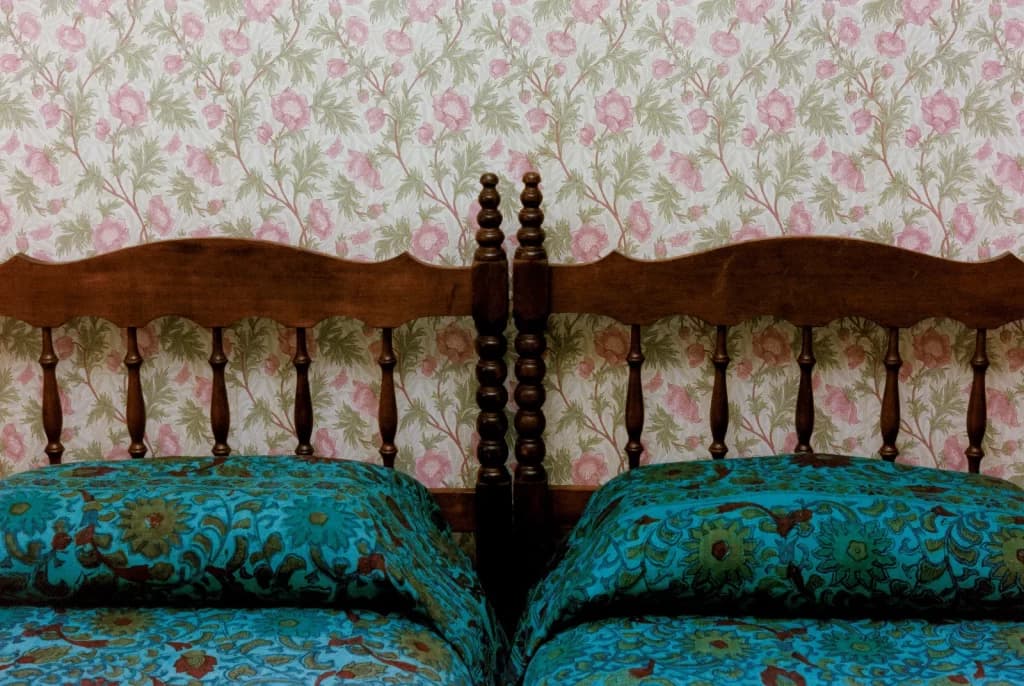
Ever felt like the mess you left behind in your hotel room can be turned into a medium for art? Sophie Calle surely did. On the 16th of February, 1981 she started working in a Venetian hotel as the chambermaid. She worked there as part of her project which will then be called the Hotel. And for three weeks she was the chambermaid assigned with twelve rooms of said hotel. However she had a secret agenda: She would be going through people’s stuff- their journals, bags, wardrobes, taking photos of their unmade beds, of the mess they left behind, trusting the secrecy of the maid. Little did they know it would turn into a well-known photo book by the one and only Sophie Calle.
Blurring the lines between exclusive hospitality and incognito surveillence, she took photos as the chambermaid like a private investigator. Subjects, people who stayed at those rooms weren’t exposed but their most intimate stuff were. Which makes one think about the power the camera and the shooting principle withholds: Can the simple act of pointing a camera transform someone into an authority?
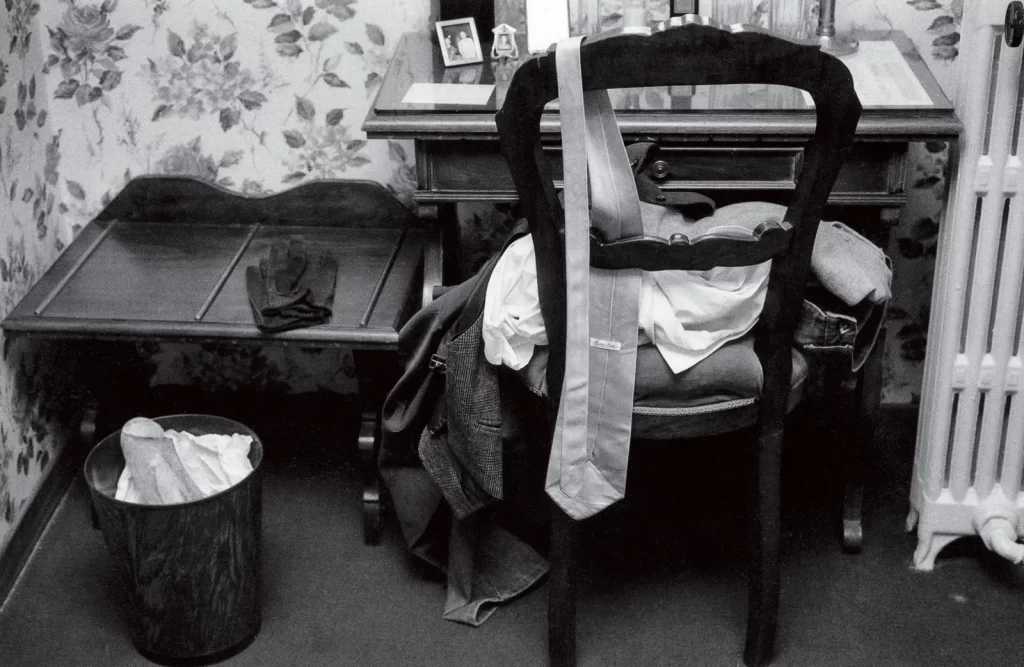
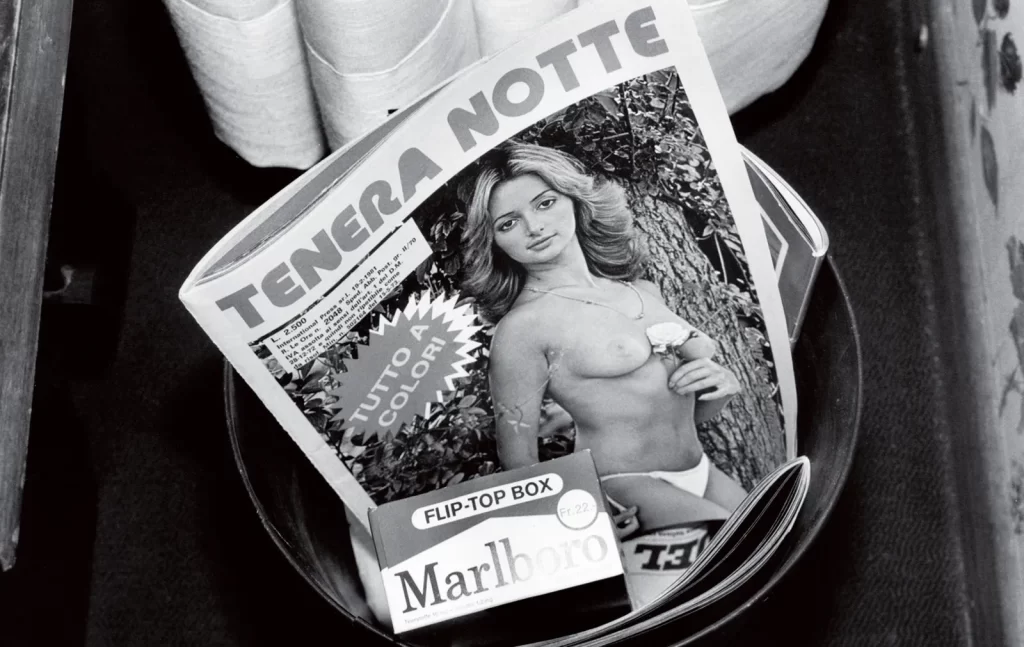
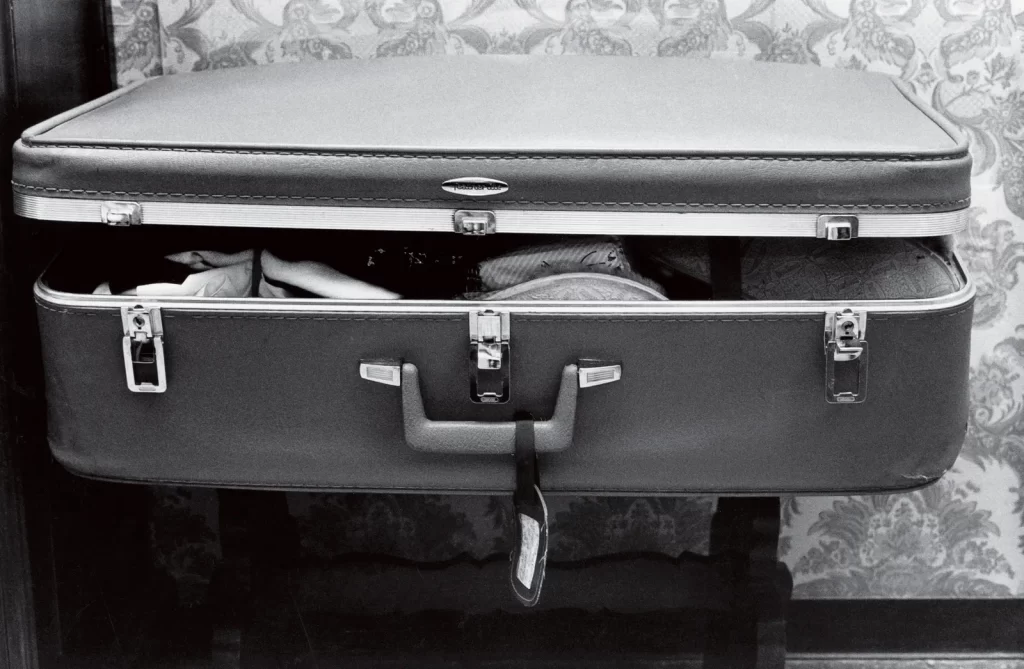
It’s impossible not to think about the inversion of power dynamics in the Hotel. The photographer’s weapon is their camera. The act of shooting is the killing itself. And the camera is the mirror for the truth, a reflection of the unsaid, the hidden. A chambermaid is the silent one, the anonymous one. They’re the ones who clean up the mess: The ones who get rid of the traces people leave behind. In this equation they are the weaker link. This bubble of secrecy bursts open with the flash of a camera. The chambermaid, Sophie Calle, is granted authority by holding the camera in her hands and exposing people’s dirt, mess and secrets -one by one, room by room…
Calle is known for her usage of voyeurism in her work. In a way, her work can be seen as feminist activism. Twisting the patriarchal input of women being the idealized muse by pointing her camera towards her subjects, or in this case their objects. She stalked Henri B. In Suite Venetienne, found an address book and contacted the people listed inside in the Address Book, shot people while their sleeping in the Sleepers and captured hotel guests’ belongings in the Hotel. The prey, the muse, the saintly woman figure became the predator with her weapon, the camera.
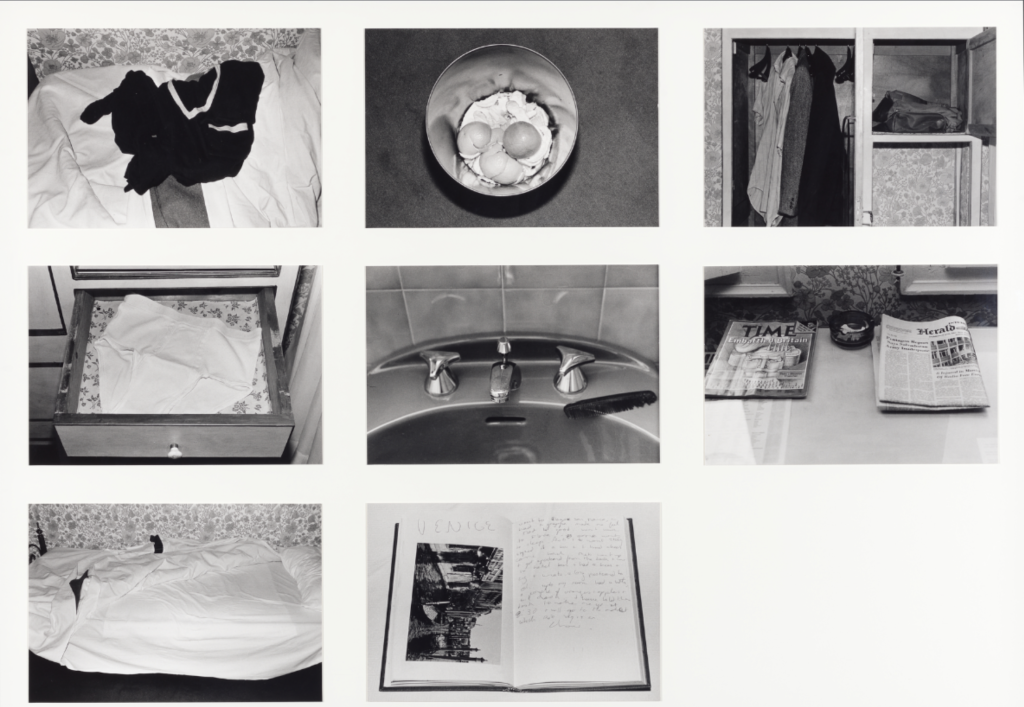
There’s double power inversion in the Hotel. Dynamics are shifted both in this project itself and in Calle’s work in general. The chambermaid shifts into being the authoritative figure exposing people’s secrets. The one who should be cleaning up traces and forget about the stuff she sees becomes the withholder of their secrets. She becomes the one who knows rather than the one who cleans. Knowledge is the biggest power, after all, and using this power makes one the authority. The other shift in power dynamics is the male gaze being used by the woman herself.
Patriarchy deemed women to be the one who should be silenced, what Calle does breaks this idea as a whole: Exposing the hidden truths and using them in her art. The stalked becomes the stalker, the chambermaid becomes the twisted investigator, the photographer becomes the voyeur… And through this twisted work, she gives us a hole in the door to sneak in and take a look. And if you find her work to be over-exploitative that crosses the ethics of art, admit to yourself that you still enjoyed it. And really who is to blame? You knew exactly what the book portrayed, but still read it.